MCP UX review for coding agents
AI builds the UI. UXRay catches the mess.
Real screenshots. Structured UX issues. Repair prompts your agent can act on. Then a before/after scorecard to prove the UI got better.
39 → 100 score
11 → 0 issues
same prompt same local eval
Real fixture evidence
landing-chaos · desktop · same pipeline
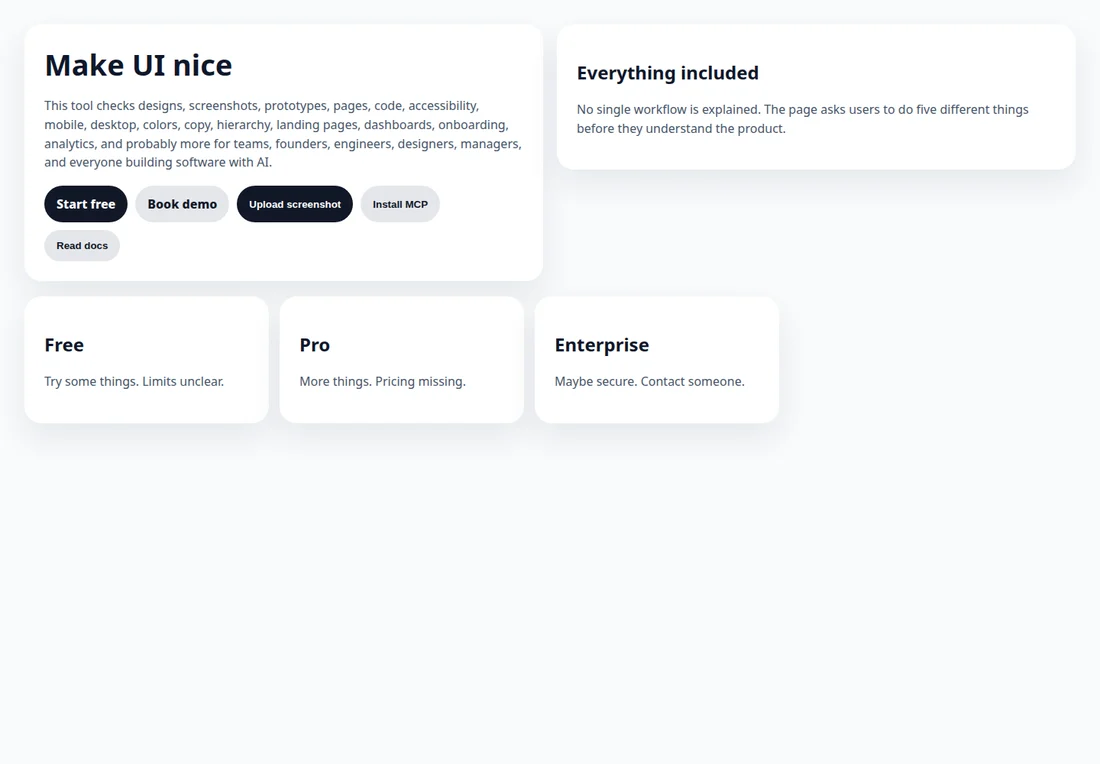
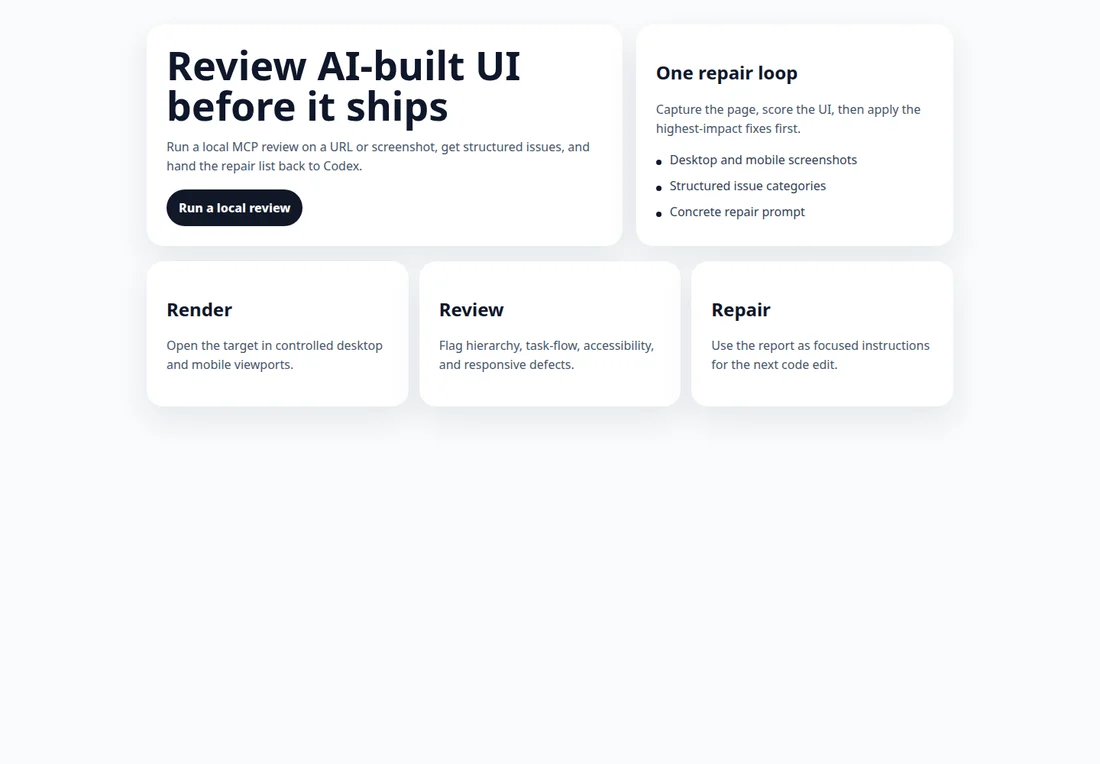
Validated repair loop
Same fixtures. Same reviewer. Same environment.
UXRay reset three flawed AI-generated screens, reviewed them locally, let Codex repair with MCP screenshots, then reviewed again. The images above are from that actual run, not mockups.
How it works
Review → repair → diff.
Render the UI
Desktop and mobile screenshots, DOM text, headings, buttons, links, forms, and overflow signals.
Tell the agent what broke
Severity, category, evidence, affected area, and a focused repair prompt.
Measure the fix
review_ui_diff compares score, issue count, high-severity count, and fixed categories.
Install
Use it where your agent already works.
npm install
npm run typecheck
codex mcp add uxray -- npm --prefix "$PWD" run mcp
npm run demo:pipeline
Cloudflare hosts the public site and static demo API. Full URL rendering runs locally today because it needs Chrome/Playwright. Hosted paid calls should run on a browser-capable backend.
Next layer
Paid calls fit naturally.
Keep local MCP free as the developer wedge. Add hosted rendering as usage-based API calls, then bundle teams by review volume and CI seats.